Sunday, October 04, 2009

Νάνι Μερθέντες

Mercedes Sosa- "La Negra" or "The Voice of the Voiceless"- has been an emblematic figure in many aspects.
She had set her firm foundation on the folk musical tradition of her country (Argentina) and became a voice of innovation. She stood by the youth, she supported new artists.
She was politically conscious and a fighter against oppression during the gloomy years of successive dictatorships. She got arrested in 1979 on stage along with people from the audience. Nueva Cancion represented a disturbance: most of genuine art becomes a disturbance.
She died last night in Buenos Aires.
I will miss her face behind her big glasses.
Here is a sample of her collaboration with Maria Farantouri, a lullaby by Manos Hadjidakis and Nikos Gatsos (a translated poem of F.G. Lorca). Her accent is great and the tone is superb.

Labels: , , , ,

Thursday, September 04, 2008

Μετά τη ραμαζανική νύχτα

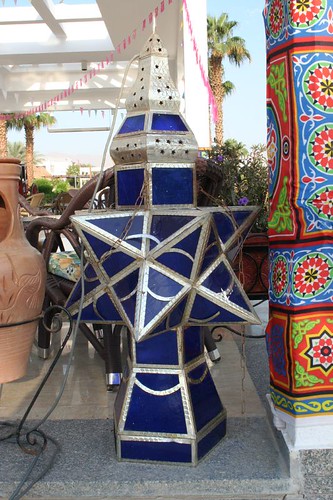
Στο Αμμάν, όταν έρχονται οι μέρες του Ραμαζανιού, έπονται αλαφρόκαρδες οι αντίστοιχες νύχτες. Μικρά τεχνάσματα των καταστηματαρχών επιχειρούν να εξασφαλίσουν κέρδος περαστικό και οι πελάτες που ξέρουν την περιοδικότητα αυτού του παραδοσιακού μάρκετινγκ, δε διαμαρτύρονται: Έξω από ορισμένα καφενεία, ναργιλετζίδικα, βάζουν οι πολυμήχανοι χρωματιστά πανιά, δήθεν για να δοθεί η εντύπωση της γιορτινής τέντας. Μπαίνοντας στο μαγαζί, πολύ καπνισμένο ήδη από την εντατική ναργιλοποσία, ένεκα η αποχή πολλών ωρών από νηστεύσαντες και μη νηστεύσαντες, βρίσκει κανείς στα τραπέζια λίγους ξηρούς καρπούς, λούπινα και ίσως κανένα γλύκισμα, και μερικές φορές έναν τραγουδιστή συνοικιακό που τραγουδάει μεγάλες αραβικές επιτυχίες του παρελθόντος. Στο τέλος έρχεται οπωσούν φουσκωμένος ο λογαριασμός. Με τη λήξη της περιόδου, όλα εξαφανίζονται σε μια νύχτα. Όπως οι γητειές στα παραμύθια. Απομένει μονάχα το ίχνος της κόλλας που χρησιμοποιήθηκε για τα πολύχρωμα πανιά ώστε να αρμοστούν στον τοίχο ή στη βιτρίνα. Μα κι ετούτο γρήγορα θα φύγει κάτω από το εργατικό χέρι του Αιγύπτιου υπαλλήλου που θα το τρίψει μέρα τη μέρα.
Έτσι, χτες βράδυ, σα ραμαζανική νύχτα είχα κι εγώ στο σπίτι με αγαπημένους φίλους, μάλιστα ο Άνας έφερε και " 'ατάγιεφ", το γλύκισμα της εποχής. Είπαμε πολλά ευχάριστα, ακούσαμε μουσική, είπαμε όμως και τις στενόχωρες διαπιστώσεις από τα εκπαιδευτικά και τα άλλα. Πλούσια ευτυχώς η καταγραφή ιστοριών και, βρίσκοντας παραλληλίες, μισογελάς γιατί στην πλάτη σου είναι φορτωμένη η ιστοριούλα:

"Ο Ντεληχλίμπαμπας"

Τον καιρόν των Βενετσάνων ένας Ρωμιός, ο Ντεληχλίμπαμπας, είχε σπίτια εκεί απάνω στο νησιδάκι, και ήταν δάσκαλος και εδιάβαζε τα παιδιά. Όταν πέθανε, άγιασε. Τον είδανε όμως οι Τούρκοι και είπανε πως ήτανε δικός των άγιος, γιατί τον εβρήκανε σινουτεμένο (περιτετμημένο). Οι Τούρκοι εμοίραζαν εφτάζυμα και γλυκά στ' όνομά του, κι επήγαιναν κι εκαίγανε τόρτσα λαμπάδες στο μνήμα του και μπουγούρι, που είναι λιβάνι καλύτερο από το δικό μας. (Παράδοση Πύλου)

Ν. Γ. Πολίτης, Παραδόσεις- Μελέται περί του βίου και της γλώσσης του Ελληνικού λαού, Αθήνα 1994, τ. 1, σ. 89.

Labels: , , ,

Thursday, June 12, 2008

A.O.K.

A.O.K. was the name of our local football team, and it used to be strongly present at the national Premier League for years. The name is still the same, the city is still the same, and yet they are not. I mean they are either smaller or bigger, these unnoticeable alterations which occur with time and prove Heraclitus right. And the gaze changes... I do not know if it grows duller or sharper. Both, I assume. Anyway, I just wanted to say that my dad's passion to pass his own fascination with good football over to his sole son proved a total disaster and from an unexpected side-way, without the slightest bad intention: the destined tendency goes this way, one reaches the dungeon hall full of gentle intentions. He has been an excellent driver, but those 45 minutes from home to the stadium were so heavy on me, I would try to be brave and hold my vomit back and I would normally succeed, hoping for the still orange drink to soothe my despair.
that short Papaioannou (on the left) was my absolute favorite

I saw many stars of the real football times, that they were playing just for the glory and the cheer. I attended spectacular matches, I saw people waving their hats, their jackets and raising their voices in despair, in exaltation, in contempt. It was all so lively, but I would be rather trying to conceal my discomfort. Every time that I notice big football events happening, I expect someone to get me a still orange drink. Nevertheless, I was admiring Mimis Papaioannou, the short devil, Domazos for the popular appeal he enjoyed and Koudas for his determined style. Many matches have I attended.

Labels: ,

Wednesday, October 24, 2007

Icons for Life, Images of Death

This is a postponed note, because Argyris had sent me his link in time, concerning an article on Ilias Petropoulos' "Graveyards of Greece" last spring. I could not touch the topic, being so preoccupied with the fear of death myself. Primum vivere, deinde phisophari, as Latin would put Aristotle in its infinitives.
Nevertheless, I did not take any step; I just posted him my thanks and shared some personal point of view concerning Petropoulos. I was so pleasantly shocked to know that in 2003 he took his steps to their honest end, asking a friend, after the cremation of his corpse to dispose the ashes in the sewer of Paris. Wise as always, he knew that, first, some virtuous voices would not allow that in Greece, or would spoil the dignity of death with their virtue, and, second, that the places where we spend long years, big proportions of this mess which is cut and trimmed in biographies, and is named "life", become in principle suitable fatherlands for death. I have to get this volume, I had a look at it, it looked great with all these photographs he had been obsessively gathering and taking from graves, processions, tombstones, reliefs, the short and definite Curricula Vitarum on marble, wood, cement, stone, a common nothingness on occasions of extreme pressure or poverty. And his comments. Most of the times, the arrangement and the selection were adequate texts by themselves. It has to be gotten during one of my "Flying Dutch" adventures.
Since the 1960s he gathered much (10.000 photographs), he pondered a lot and he found meaningful this sociology and cult of death, in the sense that it was commenting more on life than its negation. I remind myself here that this is also true in "Les Dances Macabres" of the late Middle Ages. By fearing the end, we find the vitality to live some instances of forced difference and meaning, out of the gray zone of work-home-pension-future- to-secure-for-children-and-for-the- hard-times-to-come-Gracious- God-spare-us. And He/She never does. Does He/She? The critics and reviewers underline his achievement: to prove that Greece as a concept of Life at its human scale, crazy and wise, as a Golden Principle shown basically through its violations and the human compassion to them (English uses the wrong term Empathy for the above described condition), to the imperfection (knowing the value of Perfection)is to be found in the towns, villages, working class areas, the mixed racially customs of some regions. Athens and Thessaloniki (the central graveyards, this is) are so linear and boring in the way the extend their hand to bid a farewell to their departing citizens.
Petropoulos is a strange combination of a folklore studies scholar, of a philologist, a theorist and a sociologist. Let me mention here some of the titles of his books: Songs of the Greek Underworld: the Tradition of Rebetika, Old Salonica, Wooden Doors, Iron Doors in Greece, Of the Prison, Underworld and Karagkiozis, The Turkish Coffee in Greece, Kaliarda: the Jargon of the Greek Homosexuals, the Brothel, The Holy Weed, Le kiosque Grec, Cages a Oiseaux en Grece, Les Juifs de Salonique: In Memoriam, and many-many-many more.
For me, apart from the bliss of reading good texts on prohibited, or red-zone issues, he is special in this way: Perhaps there is hardly any contemporary intellectual in my language engaged with the great values of Enlightenment, continuing this French bred tradition: I mean secularism, freedom in writing and exploring, criticism to nationalism as a system that violates or, simply, obscures the Social Pact foundations of Equality, and of the Rights beyond colour, language, faith, religious convictions and so on. At the same time, he possesses the passion of romanticism and its reiteration or specification in Realism and, especially, Naturalism. His interest in the underworld, the suffering ethnic groups, the classified "deviations" of human sexuality, indicate a strange mixture of the two gladiators of theory. The eyes of Zola but the interpellation of Voltaire.

Labels: , , , , ,

Monday, April 23, 2007

Τ' Αη Γιώργη

Πολύχρονη, μες στα κίτρινά σου πάντοτε
Σε πλεόν ευτυχισμένες εποχές, όταν ο χρόνος δεν ήταν τόσο Διοκλητιανός, δε γιορτάζαμε τα γενέθλια, ποιος να θυμάται τι και πώς, ποιος ασικρίτης να κρατήσει μαρτυρία της γέννησης, ποιο σύστημα χρονολόγησης, ποιο φεγγάρι και τι ινδικτιώνος, τι απο Κτίσεως Κόσμου. Έτσι, μέναμε στον κύκλο των ονομάτων, στο άρμα της θεότητος, στο αμόνι της αναλογίας και των λαμπρών ομωνύμων μας. Πολλοί είχαν και το τραγούδι τους, σαν ήρωες από λαϊκά μυθιστορήματα που περιμένουν το Νικόλαο Βλαστό υπομονετικά στη Βενετία να καταπιαστεί μαζί τους. Όπως το κάτωθι:
Άγιε μου Γιώργη αφέντη μου κι αφέντη καβαλάρη
αρματωμένος με σπαθί και με χρυσό κοντάρι ...

Άγιος είσαι στη θωριά κι άγιος στη θεότη
παρακαλώ βοήθα με άγιε μου στρατιώτη
Από το άγριο θεριό και δράκοντα μεγάλο
όπου τον πήγαιν' άνθρωπο κάθε πρωί και άλλον
Αν δεν τον πήγαιν' άνθρωπο κάθε πρωί στην ώρα.
νερό δεν άφηνε να πιεί κανείς μέσα στη χώρα.
Τα βουλετιά τα ρίξανε τίνους θέλουν να τύχουν.
Και τύχανε τα βουλετιά εις τη βασιλοπούλα
όπου την είχε η μάνα της μία και μοναχούλα
Ο βασιλιάς σαν τ' άκουσε πολύ βαρύ του φάνη.
- Το βιός μου όλο πάρτε το και το παιδί μου αφήστε.

Για περισσότερες λεπτομέρειες και ολίγη ψαλτική μελωδία, βλ. http://www.aegean.gr/culturelab/Sounds/sound44.htm

Έτσι, σήμερα είναι μέρα γιορτινή, ακόμη και στον Σουρρεαλισμό, ανατριχιάζουν οι στίχοι του Γκάτσου. Κάτι που μοιάζει με Ρ.Μ.Ρίλκε μα δεν είναι.

Ο ιππότης κι ο θάνατος

Καθώς σε βλέπω ακίνητο
με του Ακρίτα τ' άλογο και το κοντάρι τ' Αι Γιωργιού
να ταξιδεύεις στα χρόνια
Μπορώ να βάλω κοντά σου
μια νεραντζιά στου φεγγαριού
τους χιονισμένους κάμπους
κι αυτά τα σίδερα που φορείς
μπορώ να σου τα στολίσω
μ' ένα κλωνί βασιλικό κι ένα ματσάκι δυόσμο
Μα εγώ που είδα τους απογόνους σου σαν πουλιά
να σκίζουν μιαν ανοιξιάτικη αυγή
τον ουρανό της πατρίδας μου
θα βάλω τώρα κοντά σου
τα πικραμένα μάτια ενός παιδιού
μέσα στη λάσπη και το αίμα της Ολλανδίας
Αυτός ο μαύρος τόπος
θα πρασινίσει κάποτε
Το σιδερένιο χέρι του Γκετς
θ' αναποδογυρίσει τ' αμάξια
θα τα φορτώσει θημωνιές από κριθάρι και σίκαλη
Και τότε πάλι στις σπηλιές των ποταμών θ' αντηχήσουν
βαριά σφυριά της υπομονής
Όχι για δαχτυλίδια και σπαθιά
αλλά για κλαδευτήρια κι αλέτρια.

(όπως το διάλεξε ο Χατζιδάκις, αλλά ας το δει κανείς κι ολόκληρο με την αγγλική μετάφραση στο χρήσιμο πάντα http://genesis.ee.auth.gr/dimakis/poetrygreece/6/11.html)

Labels: ,

Friday, April 06, 2007

Αλιβάνιστος


- Σώνουν, Κυρά μου, οι προσευχές, σώνουν
και οι μετάνοιες
και τον υιόν σου πιάσανε και στον χαλκιά τον πάνε
κι στου Πιλάτου τας αυλάς εκεί τον τυραννάνε.
Η Παναγιά σαν τ' άκουσε έπεσε και λιγώθη.
Σταμνί νερό της ρίξανε τρία κανάτια μόσχο
και τρία νεροδόσταμνα για να της έρθει ο νους της.
Και σαν της ήρθ' ο λογισμός και σαν της ήρθε ο νους της
ζητάει μαχαίρι να σφαγεί, γκρεμό να πάει να πέσει,
ζητάει τ' αργυροψάλιδο να κόψει τα μαλλιά της.


Η Παναγιά πλησίασε, γλυκά τόν(ε) ρωτάει:
- Δε μου μιλάς, παιδάκι μου, δε μου μιλάς, παιδί μου;
- Τι να σου πω, μανούλα μου, που διάφορο δεν έχεις.
Σύρε, μάνα μ', στο σπίτι σου, κάμε την προσευχή σου
βάλε κρασί στο μαστραπά κι αφράτο παξιμάδι
και δώσε την παρηγοριά να την(ε) λάβουν κι άλλοι.
Μόνο το Μέγα Σάββατο κοντά το μεσονύχτι
που θα λαλήσ' ο πετεινός, σημαίνουν οι καμπάνες.


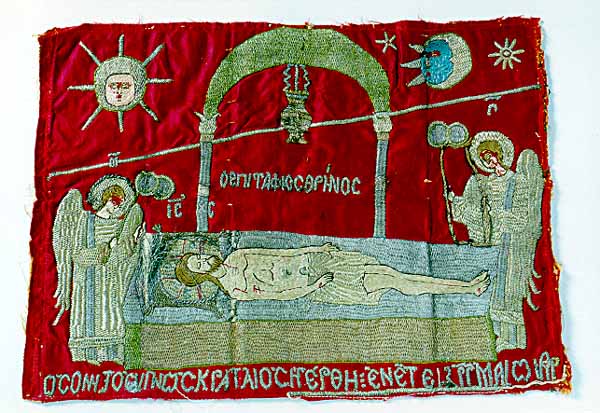
Παράφωνη ήταν πάντα η δημοτική μας Φιλαρμονίκη. Ήταν όμως ένας κήπος παιδιών κι εφήβων. Τόσο ήσυχη, θέλω να πω σιωπηλή, ήταν η κωμόπολή μας που άκουγα τις πρόβες τους. Παλιότερα μάλιστα σε ένα πατάρι, απέναντι από το σπίτι μου, εκγυμνάζονταν. Ποτέ δεν έδωσε έδωσε συναυλία, ποτέ φανφάρα με διασκευασμένα τραγούδια. Ήταν για εθνική κι εκκλησιαστική χρήση. Τη Μεγάλη Παρασκευή, ο Επιτάφιος. Τότε μόνο ακούονταν οι παραφωνίες της σωστές, σαν προϋπολογισμένες, ένεκα που ταίριαζαν στο λυγμό. Περνώντας, μας έρραιναν κάποιες μαυροφορεμένες με κολώνια από τα μπαλκόνια τους. Στους τενεκέδες με τις γαρυφαλιές είχαν βάλει σειρά τα κεράκια. Το καθένα κι ένας δικός τους απών, φαντάζομαι. Στάση, δέηση, συνέχεια, φανφάρα. Τόσο με ανατρίχιαζε το όλον πράγμα που έλεγα δεν θα ξημερώσει η επαύριο. Προμηθευόμουν το μελισσοκέρι μου από τα κηροπλαστεία της Καβάλας με μεγαλύτερη φροντίδα απ'ό,τι έκανα για τη λαμπάδα της Ανάστασης. Όταν κάποτε άκουσα την τυποποίηση ότι οι Καθολικοί ρέπουν περισσότερο στο Πάθος από εμάς, απόρησα. Γίνεται λοιπόν να φτάσει η κλιμάκωση σε ψηλότερες κορυφές; Ή μήπως ταιριάζει στο θεολογικό Προκρούστη κάποιου μεγαλώνυμου;...

Labels: , ,

Saturday, March 31, 2007

Λάζαρος τριήμερος

Με μαλακή, ήσυχη βροχή τελειώνει εδώ κι απόψε ο Μάρτιος. Από αυτές που κατεβάζουν γλυκά νερά στα πηγάδια και δίνουν χρώμα κίτρινο στα μικρά αγριολούλουδα. Τέτοια συμβαίνουν από παλιά, άνοιξη, το πλάνταγμα της άνοιξης, τα θαύματα, οι αναστάσεις.

"...απέστειλαν ουν αι αδελφαί προς αυτόν λέγουσαι: Κύριε, ίδε ον φιλείς ασθενεί" (Κατά Ιωάννην, ΙΑ, 3)

(η εικόνα από το http://dim-anyfi.arg.sch.gr/4olo.htm)
Η κουκλα του Λαζάρου που κρατούσαν τα παιδιά στους "Αγερμούς" από σπίτι σε σπίτι.

Αύριο η Κυριακή των Βαϊων που εδώ εορτάζεται με ακριβέστερες τις λεπτομέρειες: φοινικόκλαρα, πλεγμένοι σταυροί και πανεράκια. Τα παιδιά, στα σκαλιά της εκκλησίας, στη Σουεφίγιε, επιδεικνύουν τις λαμπάδες τους που θα χρησιμοποιήσουν μια εβδομάδα αργότερα. Κάποτε που βρέθηκα στο πλήθος, με τα ρούχα τα καινούργια, τις φωνές και τις οικογενειακές φωτογραφίες μπροστά στο ναό, έμεινα έκπληκτος. Ποτέ δεν είχα υπολογίσει ότι η έλευση στη γειτονική Ιερουσαλήμ θα προκαλούσε τόσον ενθουσιασμό. Αν με ρωτούσε κάποιος για το ιδιαίτερο της ελληνικής εκδοχής, (όπως κάποτε που με ρώτησε η Τζιχάν "Μα γιατί οι Έλληνες φτιάχνουν τόσες πολλές ιστορίες και βάζουν τόσες λεπτομέρειες στη μυθολογία τους;") θα έλεγα πως είναι οι πολλές λαϊκές τελετουργίες που σχεδόν ξεφεύγουν από όσα περιγράφουν οι γραφές (ή οι Γραφές). Βέβαια ξεφεύγουν γιατί φτάνουν από πριν και πορεύονται χέρι-χέρι με βασικά ερωτήματα γύρω από το τέλος, τη μνήμη, τη μορφή που έχει ο χρόνος, τη δυνατότητα να ξαναζήσουμε στα Κύθηρα της αγάπης με τους ηγαπημένους. Ο Λάζαρος είναι φίλος και πεθαίνει, μα ξανασηκώνεται, βγαίνει πίσω από τον ογκόλιθο του τάφου κι εκεί το επεισόδιο τελειώνει γιατί είναι μόνον η μικρογραφία όσων πρόκειται να συμβούν στον πρωταγωνιστή. Εκεί θα έχουμε αληθινή προδοσία, διαπραγματεύσεις πολιτικές, βασανιστήρια, το θέατρο της εξουσίας, ταραχές, σεισμούς και σημάδια φυσικά. Κανονικά δεν ξέρουμε άλλες λεπτομέρειες για το επεισόδιο του Λαζάρου. Ούτε κηρύγματα, ούτε ακριτομυθίες από τη μεριά του. Σιωπηλός κι ευγνώμων που ξανάδε το φως της Παλαιστίνης, τα σπίτια και τα περιβόλια της κωμόπολής του.
Όμως όχι και στη λαϊκή εκδοχή: οι Λαζαρίνες πηγαίνουν από σπίτι σε σπίτι τραγουδώντας:
Ήρθε ο Λάζαρος
ήρθαν τα Βάγια,
ήρθε η Κυριακή
που τρων τα ψάρια,
σήκω Λάζαρε και μη κοιμάσαι
ήρθε η μάνα στους από την πόλη
σου φερε χαρτί και πορτοφόλι
γράψε Θόδωρε, γράψε Δημήτρη
γράψε Λάζαρε και κυπαρίσσι
Οι κοτούλες μας αυγά γεννούσαν
Οι φωλίτσες μας δεν τα χωρούνε
Δώστε μας για να σας ευχηθούμε
ΚΑΛΟ ΠΑΣΧΑ (-παράδοση Κομοτηνής)

ή το άλλο με μικτές ομάδες παιδιών:

Πού 'σαι Λάζαρε
Πού είναι η φωνή σου
που σε γύρευε η μάνα κι η αδελφή σου.
-Ήμουνα στη γη
στη γη βαθιά χωμένος
κι από τους εχθρούς,
εχθρούς βαλαντωμένος.
Βάγια, βάγια των Βαγιών
τρώνε ψάρια τον κολιόν
και την άλλη Κυριακή
ψήνουν το παχύ τ' αρνί.
Ή εκεί που ζητά νερό να λησμονήσει, λεμόνι να πλύνει το στόμα του ένεκα που είδε φόβους, είδε τρόμους, είδε βάσανα και πόνους.

Labels: , ,

Saturday, March 24, 2007

300 times


Again obvious politics in Hollywood. Two decades ago it was the space-war and the traveling humongous space ships. Ten years ago, disasters and meteorites, natural disasters and human cruelty. Recently, Greek history and mythology (and other sagas): "Troy" made a good start with the Oriental Trojans represented as a civilized, moral and heroic power. It offered bad services to the U.S. justifications of war against oriental tyrannies (Iraq). Then, this error was rectified with "Alexander", where Darius appears as Osama bin Laden. Now the "300", (always they forget the 700 poor Thespians who also volunteered to help Leonidas and die at Thermopylae- even in Greek history books they put them in the shadow zone of secondary figures.)


Reactions:1. http://www.freerepublic.com/focus/f-news/1799652/posts
2. http://www.300spartanwarriors.com/
The pics are from Frank Miller's "300", and in the second one a comparison between the comic drawing and the movie scene.
Not that far from the account of Herodotus who did field work and interviews just 30 years after the events (480 B.C.).
Personally I remember the monument of Thermopylae always on our family trips to Athens. Always my father would stop there and we would play, by the basis of Leonidas statue. Even I remember once I forgot there one of my favorite toys: a small spear man made of led and coloured in red and vivid blue. A miniature of historical instrumentation.

Labels: , , ,

Wednesday, February 28, 2007

Shadow Figures Theater

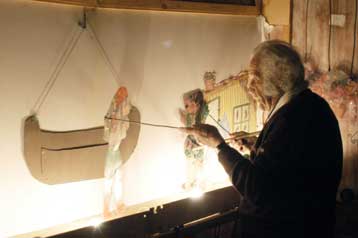
Eugenios Spatharis performing
On February 26th, the Greek Ministry of Culture decided to honor- with its remarkable tendency towards delay and eternity- Eugenios Spatharis, the most reputable animator of Shadow Figures Theater in Greece for his achievements during the last 65 years, in keeping alive the tradition of Karagkiozis. He strarted performing during the dark years of the German occupation (early '40s), while still an adolescent. There are many other shadow theater traditions around the world (in China, Indonesia, the Ottoman Empire) but Karagkiozis proved to be flexible in commenting on actual events, politics, social aspirations, phenomena of daily life, so that eventually this spectacle has not been fixed in given stories/myths. At the beginning of the school year he appears as "Karagkiozis Teaching", before the municipal elections "Karagkiozis the Mayor", before the national elections "Karagkiozis at the Parliament" and so on, along with other favorite stories that show him fighting side by side with Alexander the Great against the Cursed Snake.

I am tempted sometimes to compare these simple sketches with the way that Aristophanes criticised his contemporaries, by means of mythology and mainstream artistic reperesentations. The characters of this theater are more or less counted:


Karagkiozis- a poor Greek guy with a rebellious spirit. He is a family man, but at the same time lazy, careless, humorous, unconventional, adventurous, ready to question any social hierarchy, or be seduced by the beautiful daughter of the ruler.


Hatziavatis- a middle class Greek in the ottoman Empire: Ready to co-operate with the basha, to become spineless, to get some profit, to obey the rules of social mannerisms.


Sior Dionysios- a Greek from Zante, westernized, poetic, using italian words every now and then, strong in his feelings, helpless with reality, a friend for Karagkiozis.


Stavrakas- the typical macho street guy, he pretends to be the Lionheart, but in the end he is coward, beaten up, worthless, an exemplary liar.


Morphonios- an ugly pampered young man, spoilt by mom, delicate and an easy victim of Karagkiozis's strong hand.


The Jew- a Jew merchant of Istanbul or Thessaloniki, where Greeks and Jews were living side by side. Stingy, funny, relatively wealthy, sly on occasions, timid.


The Basha- the representative of the ruler, powerful, respectful, he never sings during the performance, keeping appearences.


Barba Yiorghos- the mountainous Greek braveheart of the south, unpolished in his behaviours, strong in fights, stubborn and proud, using a heavy accent. He is the uncle of Karagkiozis usually.


Veligkekas- the Turkish-albanian guard of the Basha. Violent, strong, stupid, using a strange dialect in which greek, turkish and albanian phrases come together.


One can easily notice the stereotypical representations; they originate from the long Ottoman experience in Greece. What is particularly interesting is that this world of another era could travel through time and become a tool for an up to date commentary and sharp criticism. Revealing perhaps continuities in human behaviour. I was so delighted while watching a series arranged by Spatharis, on Odyssey, representing Karagkiozis as one of Ulysses's sailors. Karagkiozis also became the theme of some interesting ballads of protest. He became a figure of musical and still one can buy his leather or cartboard figure in Plaka, or elsewhere. As a hero, he is positive and admirable. But the expression "Είσαι Καραγκιόζης ρε συ!!!" means "You are ridiculous, pal"

Labels: , ,