Monday, September 20, 2010

Ντίμα Μποβαράτ

Moebius Ship γλυπτό του Tim Hawkisnson
Μου λέει τους καημούς του πάντα. Δεν ξέρω πως τού μπήκε η ιδέα να με ονομάσει δεύτερο πατέρα του μα θα ήταν γιος να τον καμαρώνει κανείς. Από μικρός κράτησε το μαγαζί, οι γονείς έφυγαν να εργαστούν και να φέρουν καλά και προκοπή. Εκείνος έμεινε στο πόδι τους όχι μόνο με την έγνοια του μαγαζιού αλλά και με την ευθύνη του μικρότερου και ρέμπελου αδερφού. Όταν την αγάπησε, όταν αγαπήθηκαν όπως νόμιζε, μου την έφερε να την γνωρίσω. Έμεναν στα κενά τους στη βιβλιοθήκη της Ε. Γ. και διάβαζαν. Με τι φροντίδα της έδειχνε εικόνες και λέξεις και της εξηγούσε τα πολλά που με άσβεστη δίψα μάθαινε... Με τι πουριτανική σοβαρότητα την αντιμετώπιζε για να μην την εκθέσει... Σαν αποφοίτησε κι ενώ είχε υποτροφία για θερινό πρόγραμμα κι εύκολα θα εξασφάλιζε κι άλλην για τα μεταπτυχιακά του, αποφάσισε μετά μια βδομάδα να πάει στις χρυσοφόρες χώρες του Κόλπου να δουλέψει, να μαζέψει λεφτά και να την αρραβωνιαστεί κατά το πρέπον, του χρόνου το καλοκαίρι. Σήμερα μου έστειλε απελπισμένο μήνυμα πως εκείνη είπε το "ναι" στον πρώτο που εμφανίστηκε στις σκάλες του πατρικού της και ζήτησε το χέρι της. Σκέφτηκε το χαμένο χρόνο, το πόσους δρόμους ανηφόρισε λοξοπατώντας χάριν του μέλλοντος, του σχεδόν απτού μέλλοντος. Έπειτα, δεύτερο συμπληρωματικό σημείωμα ζητώντας μου μια χάρη: να του πω τα πέντε βιβλία που θα ξεδιάλεγα από τη βιβλιοθήκη μου ως θησαυρούς. Ήθελε την παραμυθία μέσα από πλοκές και μύθους, να σταθεί ένα βήμα πίσω από την θλιβερή έκπληξη που μόνον ένας αγαπημένος άνθρωπος μπορεί να μας φιλοδωρήσει.
Κι έτσι, βγάζοντας την εικόνα, φάνηκε η σκιά από το κάδρο της Ντίμας Μποβαράτ.

-Παραλλαγμένα περιστατικά βέβαια, όπου το Ντίμα είναι τυπικό όνομα κοριτσιού (σημαίνει σύννεφο που φέρνει βροχή) και το Μποβαράτ είναι υβρίδιο τυπικής κατάληξης επιθέτου ιορδανικής οικογένειας και ηρωίδας του Φλωμπέρ...

Labels: , , ,

Sunday, March 01, 2009

Επικαιρότητες...

Από καθαρή σύμπτωση διαβάζω αυτές τις μέρες πάλι, και πιο προσεκτικά, το "Κατά Σαδδουκαίων" του Μιχάλη Κατσαρού (ας είναι καλά κάτι επιπλέον εκπτώσεις στα βιβλιοπωλεία, στους πάγκους με τα ευπώλητα): εκείνο που βρίσκει τον κολοφώνα του στο "Η διαθήκη μου"
Αντισταθείτε
σ' αυτόν που χτίζει ένα μικρό σπιτάκι
και λέει: καλά είμαι εδώ.
Αντισταθείτε σ' αυτόν που γύρισε πάλι στο σπίτι
και λέει: Δόξα σοι ο Θεός.
............................
Αντισταθείτε
σ' αυτόν που χαιρετάει απ' την εξέδρα ώρες
ατέλειωτες τις παρελάσεις
σ' αυτή την άγονη κυρία που μοιράζει
έντυπα αγίων λίβανον και σμύρναν
σε μένα ακόμα που σας ιστορώ.
Αντισταθείτε πάλι σ' όλους αυτούς που λέγονται
μεγάλοι
στον πρόεδρο του Εφετείου αντισταθείτε
στις μουσικές τα τούμπανα και τις παράτες
σ' όλα τ' ανώτερα συνέδρια που φλυαρούνε
πίνουν καφέδες σύνεδροι συμβουλατόροι
σ' όλους που γράφουν λόγους για την εποχή
δίπλα στη χειμωνιάτικη θερμάστρα
στις κολακείες τις ευχές τις τόσες υποκλίσεις
από γραφιάδες και δειλούς για το σοφό
αρχηγό τους.
Αντισταθείτε στις υπηρεσίες των αλλοδαπών
και διαβατηρίων
στις φοβερές σημαίες των κρατών και στη
διπλωματία
στα εργοστάσια πολεμικών υλών
.....
Τότε μπορεί βέβαιοι να περάσουμε προς την
Ελευθερία.

Κείμενο θυμίζω του 1953. Θα ήταν σχεδόν νοσταλγική μπαναλιτέ να τα διαβάζει αυτά ο άνθρωπος του εικοστού πρώτου αιώνα, έτσι δεν είναι; Ευτυχώς η ιδιότητα του φιλολόγου, το μερτικό του από τη δημόσια αδιαφορία, επιτρέπει τέτοιες μπαναλιτέ. Και τι χυδαιότερο άλλωστε από τις τρέχουσες δημόσιες αναπαραστάσεις του δημόσιου βίου μας; Κανείς δεν μπορεί να τις υπερκεράσει. Έπειτα μια λοξή ματιά στον ημερήσιο Τύπο, στη συνέντευξη του Γράκχου των χορτολειβαδίων της Κρήτης (όπως ο ίδιος παρουσίασε μελοδραματικά εαυτόν, όταν έδωσε εντολή να ξυλοφορτώσουν τους Κρήτες αγρότες). Είπε το λοιπόν σήμερα ο υπουργός Μαρκογιαννάκης στο Πρώτο Θέμα:
«Από την ώρα που κινδυνεύουν πολλά αγαθά, διότι σήμερα υπάρχει κίνδυνος για πολύ μεγάλα αγαθά της κοινωνίας και των ανθρώπων, ενδεχομένως να χρειαστεί να στερηθούμε κάποια πράγματα, προκειμένου να αντιμετωπίσουμε ακόμη μεγαλύτερα προβλήματα.»
Και υπόσχεται στους νοικοκυραίους ότι θα αγοραστούν πολύ σύντομα οχήματα ρίψης νερού για τις διαδηλώσεις. Πρώτα χημικά αέρια κι έπειτα ξέπλυμα, να φύγουν τα "μιάσματα".
Νά'τοι που κάναν τόσο επίκαιρο το Μιχάλη Κατσαρό πάλι.
Και από σπόντα, ευνοείται και η κλασικότητα του Καβάφη που επίσης περιέγραψε οραματικά τον αναμορφωτή στο "Εν μεγάλη Ελληνική αποικία" , τούτο του 1928.

Labels: , , , , ,

Monday, October 29, 2007

Show me again 'n' again

I have noticed that we get either dramatically silent or dramatically eloquent in exposing "truth" and the "politics of truth" about our story, momentarily paused and interpreted retrospectively for others. Defensive, cryptic, too subjective or too theoretical. As if we are a specimen of an extinct species, giving its final testimony. And indeed, we are, but it just happens so that everyone else is too. This note follows the logic of the previous post and will be reworked in Greek under the category "Structure- in numerous parts".
What we show, let it be the skeleton box, the hidden garden, the window as a frame for an instance of life, or as a frame for the curtain that depicts a scene of life, or conceals a whole perspective of life, is a lot of quicksand. Selective and partial as we are, we can easily shake the impression of others. Almost no one knows us, and we know almost no one. "I know him": what a pompous overstatement, after all...
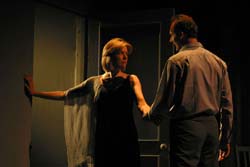
I was reading Harold Pinter these days, a favorite playwright to me, and his "Betrayal" in particular. Three people (this is the Dorian structure he prefers, A, B, C mixing and becoming the truth formula to each other) negotiate on events of betrayal. What is the correct presentation of the links among them? 1.Jerry and Robert are best friends from college, publishers of the literary magazines of their universities, colleagues later on in the publishing business. 2. Emma is married to Robert, 3. Jerry and Emma have a long affair, after she got married to Robert, and almost for most of her married life. Fine. So the issue is: when did the other part know? When did Robert know? When did Emma admit it to him? When did Jerry know that Robert knew? When did Robert admit to Jerry that he knew? When did Emma told Jerry that Robert knew? The facts are simple as that. But here again , it is the moment of admitted knowledge that makes the truth. It is not a play about betrayal as a sexual/moral violation, but a betrayal about the instance of revelation. Partial knowledge is the raw material for a multilayer betrayal, and time is its artisan. The majesty in Pinter's lines is his simple style. It goes as follows:
a. 1977: Emma and Jerry meet after long time in a pub, and they discuss the end of their affair, some two years ago. She says that she divorces Robert, and by the way she admitted to him her affair with Jerry.
b. 1977 (later): Jerry meets Robert rather anxious, to discuss or even to apologize for having an affair with his almost ex-wife. Robert says that Emma told him some four years ago, so he knew all this period that they were behaving "normal".
c. 1975: Emma and Jerry meet in their love-nest-flat. They discuss how things got different. How and why they stopped meeting. They decide to quit the flat and the relationship, to sell for "few quid" the furniture.
d. 1974: Jerry visits Robert and Emma at home. They discuss work, he talks about his overloaded schedule. Emma suffers and Robert is supportive to her.
e. 1973: Robert and Emma are in Venice. They plan a short trip. At some point, Robert says she has a letter at the poste restante, he did not pick it for her. She says that it is from Jerry. Robert knew from the handwriting. Emma admits her relationship to him and gives all the details (the flat, the duration...)
f. 1973 (later): Jerry and Emma in their flat, after her return from Venice. They are in love, she does not tell him about the revelation that took place in Venice. It shows that Jerry is not willing to change his life for being constantly with her.
g. 1973(later): Jerry and Robert meet for lunch, in an Italian restaurant. They discuss work, Venice, and Robert does not confess to Jerry that he knows.
h. 1971: Jerry and Emma in their flat-love nest. They are crazily in love. Emma is worried whether Judith (Jerry's wife) suspects anything. Jerry denies that. They admit that they are faithful to each other (in their affair.)
i. 1968: Jerry visits the newly married couple (Robert and Emma). At a moment, while heavily drunk, he has a go on her. He compliments, he proposes, he begs. She reacts quietly, reminding him of the setting in their relations. Robert comes at some point. He takes the whole thing lightheartedly and reassures Jerry about him being his most dear friend.
Hmmmmmmmmmmm... Time makes all the job. When? (and secondarily Who? What?) In retrospection all the previous certainties get dynamically undermined. The spectator wonders, trying to remember and reinterpret what he has already watched happening.
Pinter is great, and his televised speech "Art, Truth and Politics" for the Swedish Academy at the Nobel Prize Award event (December 2005) is of the strongest texts I have read during the past few years, especially when it gets aggressive towards the US policy during the last 5 decades, a policy of aggression:

'There are no hard distinctions between what is real and what is unreal, nor between what is true and what is false. A thing is not necessarily either true or false; it can be both true and false.'

I believe that these assertions still make sense and do still apply to the exploration of reality through art. So as a writer I stand by them but as a citizen I cannot. As a citizen I must ask: What is true? What is false?

Truth in drama is forever elusive. You never quite find it but the search for it is compulsive. The search is clearly what drives the endeavour. The search is your task. More often than not you stumble upon the truth in the dark, colliding with it or just glimpsing an image or a shape which seems to correspond to the truth, often without realising that you have done so. But the real truth is that there never is any such thing as one truth to be found in dramatic art.

Labels: , , , ,

Thursday, October 25, 2007

Show me your sceleton box

handcuffs, now holding time
Well... this is an awesome event I would like to attend: It takes place these days in Berlin. An exhibition of personal tokens from love stories that came to an end. Divorced, departed, alienated, after the fever of closeness. What happened to you after you "broke up", "split", "fell apart"? Everyone has to go through different paths, to come to terms with the events, the reasons of the breaking up, the precise details, the anniversaries that come and go, torturing, uninhabited, but still like long abandoned archaeological sites, "there" but not standing anymore in their vivid actuality. Apart from this difficult turning point in our private lives (on which the nation of therapists, analysts, healers, astrologists, make a fortune) there is the cruelty of the material indications of what used to be and it is not anymore. What may happen with all these gifts, the photographs, the CDs, the souvenirs? This is why some philosophers accused materiality for cruelty. The more it grows, the heavier we get. The idea of the exhibition was conceived when two Zagreb artists, Olinka Vistica and Drazen Grubisic, split up and decided to try to heal their wounds by showing in public the proofs of their finale. In Bosnia-Herzegovina the exhibition attracted many supporters. People donated 300 objects to add to the initial core of the collection. In Germany, in Berlin, already appeared 30 objects-tokens, a wedding dress, the axe that a deserted lover used for destroying the furniture of his "ex-", Valentine underwear. The experience of loss and depression is universal.
the bike he used while leaving her
The episodes which occur on the borders of private/public draw my particular attention: how the rules of making sense of private stories mix with the rhetorics of public exposure. The public sphere, expanding to the fragments of the personal territory, with the spicy curiosity of a voyeur is something common with time. Take a glimpse, for instance, at the story of the final days of Diana "the Princess of the People", or its repetition, in a more hilarious manner, with Britney Spears. Private details about the emotional life of someone on the scene, attract grave-robbers and the flash of the cameras, the pressing questions aiming at some irritated reaction, the cheap journalism of motorcycle hunting, may culminate even in tragedies.
1. A public sphere which tackles nothing big, that does not inspire and does not educate, 2. A bored, dull and mentally unmotivated public which is so much enclosed in its personal routine details, that are lived out in the way of a dramatic series, 3. Technical means which allow an easy and daily intrusion into private spaces and the publication of their finds, all of the above and other factors I cannot think of right now, contributeto this transformation of life into a daily series of "The Bold and the Beautiful" type of impression.
Come on, let us not theorize too much, fellow-voyeurs and victims/persecutors. What would you contribute to the exhibition, if it was to appear somewhere next door, or some doors further down? (Because I feel it might be different our donation in those two cases). What would I give if it was to be set in Jabal al Webdeh, what if in Thessaloniki, or Birmingham? Cigarette boxes painted by those beloved hands, a post valentine postcard (commemorating the first year of being apart), the almond tree flowers with which i was showered during some ancient spring, falling on the wooden floor and then picked carefully by the hand of the .
Why on earth have I kept all these, and many many more?

Labels: , ,

Thursday, May 03, 2007

Διόρθωση

Προηγούμενες διατυπώσεις του είδους "σε πλέον ευτυχισμένες εποχές" ή χρήσεις του πρώτου πληθυντικού προσώπου, "δεν γιορτάζαμε" και τέτοια, παρακαλώ να μη ληφθούν σοβαρά υπόψη. Δηλαδή: να μη ληφθούν υπόψη για το κατά γράμμα τους νόημα. Δεν τις είδα αυτές τις περιβόητες εποχές, κι ετούτο το πρώτο πληθυντικό πρόσωπο το διδάχτηκα κυρίως στη γραμματική ενώ στην πραγματικότητα δεν το βρήκα πιο συνηθισμένο από τον δυικό αριθμό, όχι. Για να μην πω ότι ο δυικός τουλάχιστον έχει τη γοητεία της σπανιότητας, κάποιου στολιδιού αρχαϊκού, όπως το ψάθινο καπελάκι που κάποτε είδα στο μουσείο του Βόλου σε μια ελληνιστική ταφή κορασίδος, χάρη στην άμμο και στη στεγανότητα της σαρκοφάγου. Ας υπολογιστούν όμως από τον αόρατο και σιωπηλό αναγνώστη σε σχέση με τα Κύθηρα των αναδρομικών προσδοκιών και των φαντασιώσεών μου.

Εδώ, στα αραβικά, ο δυικός χρησιμοποιείται τακτικά στο ονοματικό μέρος της γλώσσας. Όπως οι φίλοι που περνούν πιασμένοι χέρι-χέρι και τα κορίτσια σε δυάδες. Μα κι εδώ, παρά τη γραμματική αντοχή του τύπου, δεν ξέρω πόσο αληθινό είναι το νοούμενο: δεν έχω δει, στο βάθος, πιο ερημικά πλάσματα από τους "κοινωνικούς" μου Άραβες.


Έτσι και ο Χόλντεν ονειρεύεται, όταν αφήνεται στον πυρετό και στις παραληρηματικές του σκέψεις, αφού κακήν κακώς κοιμήθηκε στο παγκάκι του σταθμού των τρένων. Να φύγει με οτοστόπ στις μακρινές εκτάσεις της Δυτικής Ακτής. Να επιστρέψει τα δανεικά, τα λεφτά του χριστουγεννιάτικου μποναμά, στη Φοίβη κι έπειτα, δίχως τίποτα, να αρχίσει μια αναχώρηση κάμποσων ημερών ώσπου να φράσει σε δασμένες εκτάσεις στα δυτικά. Θα μείνει στις παρυφές του δάσους στη χειροποίητη καλύβα του. Μα όχι μέσα στο δάσος. Έτσι που να τον λούζει ο ήλιος ολημερίς. Θα δουλεύει σε βενζινάδικο και θα πείσει τους πάντες ότι είναι κωφάλαλος. Δεν μπορεί να επικοινωνήσει παρά μέσα από σημειωμένα χαρτάκια. Γιατί ξέρει ότι γρήγορα θα κουραστούν οι άλλοι από τον τρόπο αυτόν, που προϋποθέτει τη γραφή και θα τον αφήσουν στην ησυχία του. Θα παντρευτεί, αν βρει, κάποια κωφάλαλη κοπέλα και θα μιλούν μόνο με τα χαρτάκια, αφήνοντας τα σημαντικά για την αφή. Αν κάνουν παιδιά, θα τους μάθουν γράμματα από τα βιβλία για να μην μπουν σε σχολική αυλή, να μην μπουν σε κύκλους δύναμης ή επιβράβευσης της βλακείας. Έπειτα μετανιώνει ή, μάλλον, μεταπείθεται όταν βλέπει την επιμονή της Φοίβης να τον ακολουθήσει, με τη μικρή βαλίτσα της. Οπισθοχωρεί από τον φόβο μη δυσκολευτεί εκείνη.
Εν τέλει το συμπέρασμά του είναι πως ό,τι πεις, ό,τι αποκαλύψεις, ό,τι παραδώσεις στους άλλους, γίνεται βάσανο. Το μαρτύριο του αποχωρισμού και της έλλειψης. Έχω την εντύπωση ότι θα ήθελε να μην είχε γράψει ούτε αράδα, μόνο να συνομιλούσε με παιδιά: πάντα σε εκείνα βρίσκει το νόημα της επικοινωνίας βάσιμο- ο Άλλι που πέθανε πριν χρόνια και τον φέρνει τακτικά στο νου, τα πράγματα που έκαναν μαζί, οι λίγες συζητήσεις τους και τα απλά του αιτήματα. Η Φοίβη που ίσως είναι η μόνη την οποία παραδέχεται σαν υπόδειγμα ανθρώπου, ένα παιδί στο δημοτικό. Οι μικροί κοπανατζήδες που τους παίρνει με λίγες κουβέντες να τους δείξει κάτι από το μουσείο. Ο λόγος των μεγάλων ή των μικρομέγαλων παρεισφρύει παντού βέβηλος, κίβδηλος, επικίνδυνος. Μέχρι και στις προθήκες του μουσείου εμφανίζεται επαναληπτικά το "FUCK YOU" κι ο Χόλντεν που είναι βρωμόστομος ενοχλείται βαθειά. Δε θά'πρεπε να βρίσκονται τέτοιες λέξεις, τέτοια συνθήματα ασκήμιας μέσα στους παραδείσους των παιδιών.

Δεν απορώ που ο Σάλιντζερ χάθηκε αργότερα σωρεύοντας ένα μπαμπακένιο τείχος σιωπής τριγύρω του. Κι όσο πυκνότερο, τόσο περισσότεροι οι τυμβωρύχοι.

Labels: , ,

Tuesday, April 17, 2007

Everyman


I am not surprised by my silent passage through April but by my relative eloquence in March. I watch the few bloggers I really follow going through parallel ways, using different techniques: some retreat to self-referential speech ("why I love myself"), some play the drama of departure (Nikos Dimou is an almost global master in that- opening, closing, restructuring his blog, substituting it with other web pages, referring to numerous e-mails he gets and point at the direction of a glorious come-back to his posts). Anyway, for me, I just prefer reading or reviewing these days. Which text would I consider telling for the sense of these days? I look at the small pile of books next to my bed, waiting for a summary, or some last note (before the first-reading will be considered accomplished). I pick Philip Roth's Everyman, in its nice translation in Greek by Achilleas Kyriakides. Based on the title of an English allegoric drama (late 15th cent.) Everyman or The Summoning of Everyman, in which the main figure is asked by Death to present his deeds and acts on this futile world. Roth's Everyman, present his long encounter with the sense of mortality. The successive events that take place in his life (marriages, alienated children, perishing friends and relatives) and gradually are encoded with rising frequency in the operations he is obliged to go through in full or partial anaesthesia. Everyman is so damn close to death, Everyman is so damn eager to forget it every time, Everyman's life seems tidy and well arranged, rectangular, geometrical; in reality there is a Chaos realm, under the precise map. The scene with the geometry of the grave digger is a very telling one. A good book really.

Labels: , ,

Tuesday, March 13, 2007

A short play

This can be the sketch for a short play-
It is about amateurs: people in power, people in surprise and people in blindness.
The place: a building of administration- the huge reception hall like a covered atrium. Security guards in brown. Huge frames with prior and current royalties. Let the light be plenty, because of the time of the day, it is 2:20 afternoon, and everything will be accomplished within 40 minutes. -Second interior: a partly worn out office of the Head of the administration. On the tea-table, small glasses of tea, with considerable amounts of sugar.
The persons: A small group of old ladies from Greece, all with interesting signs of having kept thrones of noteworthy authority in their lives, marked over their faces. Let us say- full professors. A man in power, wearing a beautiful silk tie, relaxed by habit and profession- can be an ambassador. Another man in power, tired with black circles under his eyes, with an almost whispering voice. Can be an academic. A somewhat younger guy, in a gray suit, trying to be pleasant to all except himself. Can be a puppet.
The story: The delegation arrives a bit early, trying to make as much time as possible, since the host kept for the previous few days deminishing the time of the meeting. The host comes late. Only the panicing secretary tries to keep things going, apologizing every three minutes. The task is to offer competent young people opportunities to continue their postgraduate studies or research in Greece, in fields that could be decided during this meeting. Soon they discover that there is no interest. Something is mentioned about the difficulty of the language. And if the the studies are following the european standards. Ignoring the fact that the particular country is part of the EU since 1980, so that it is self-evident that it complies with the set standards. During the last five minutes, the key person, a clever academic, arrives, but it is late already. Everything is postponed, till further notice. (Thank God my other scholarship program is not affected by the mock epic.)
Scene: "I have watched the development of Greek Studies since day 0, and I have to mention that if we collaborate with 4-5 embassies, yours is among them. We are thankful.": It is something said so frequently that becomes what we call in literature locus classicus. Three ambassadors have heard it already. Memory is a tyrant, and this is why it gets weaker with time. What we consider a curse, may be a blessing.

Labels: , ,

Sunday, February 25, 2007

Dans la Seine, in cold

While I was reading Theodora Economides's Welcome to Ramallah, originally written in French, I was surprised to see in details the long and mischievous interviews the travellers to Palestine had to survive in order to be allowed by the Israeli authorities to enter the prohibited land, with the nine letters. Their methods of verbal terrorism in the name of law and order reminded me of Javert, in Hugo's Les Miserables. Today I found another similarity, which I read in melancholy, as if literature reproduces itself or, to put it in Oscar Wilde's words, as if life imitates art. The Israeli Defence Attache in France, David Dahan,who was missing for more than a month, was found dead in Rouen, in Seine. No particular evidence is there for criminal action and most probably it was a suicide; his close ones informed the police that he was going through depression recently. Exactly like Javert in his last steps, on the Pont Notre Dame. It is a remark that did not make me happy.

Labels: , ,